

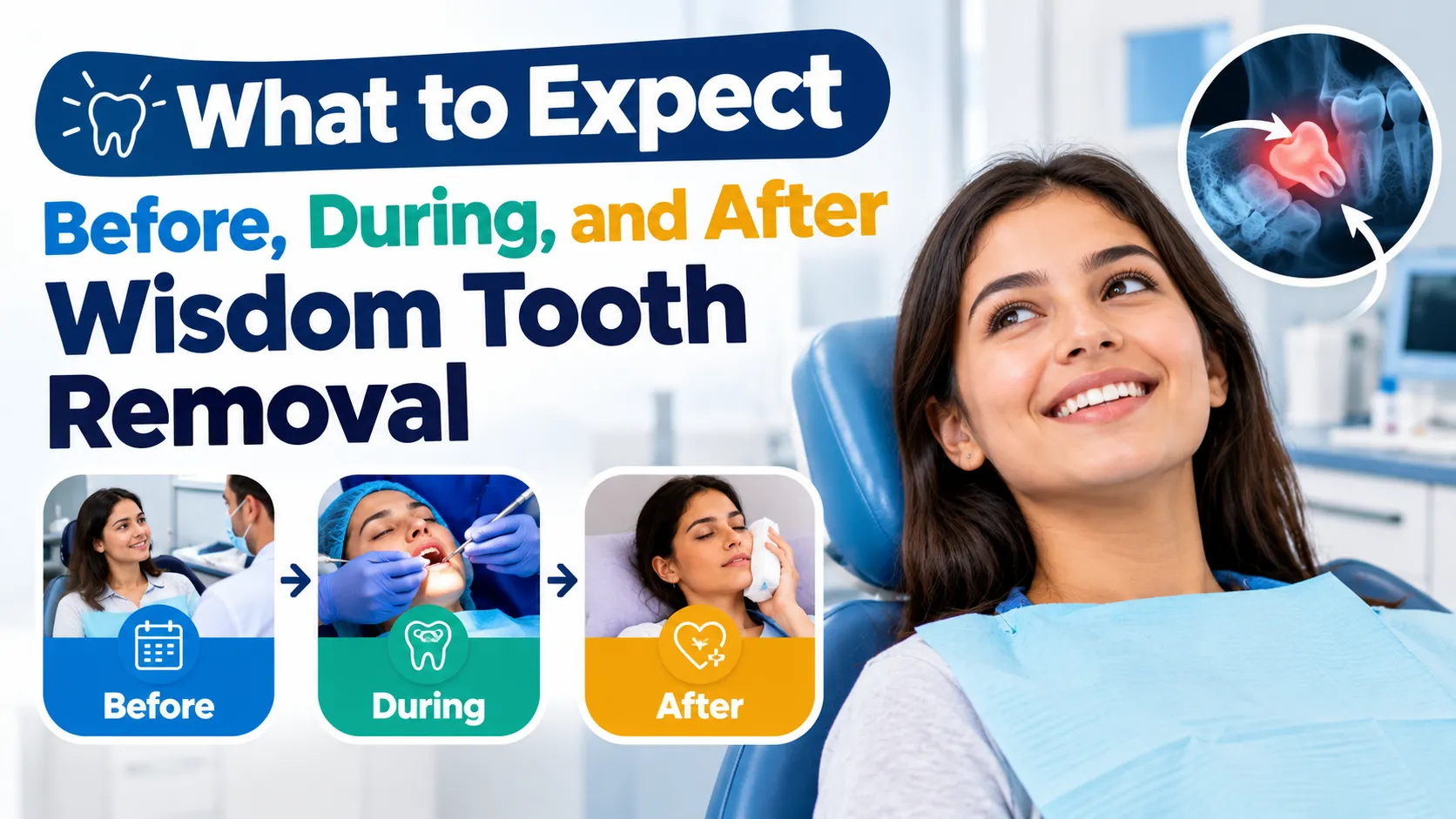
The fear usually arrives before any appointment is booked. A friend describes a swollen face and a week of misery. A cousin couldn’t open her mouth for days. Someone online posts a video that nobody asked to see. By the time a patient hears they need wisdom tooth removal in Suffern, the mental picture is already formed — and it is almost always worse than what actually happens.
This post is not a reassurance piece. It is a correction. Here is what patients actually fear, and here is what the clinical record shows happens instead.
Why Wisdom Tooth Fear Is Often Bigger Than the Procedure Itself
Nobody retells a boring extraction story. That is the core problem. The stories that spread are the difficult ones — prolonged recoveries, unexpected complications, unusual pain. The routine extractions, which make up the overwhelming majority of cases, disappear into silence because there is nothing to report.
Patients are, without realising it, working with a biased sample. Every dramatic story they have absorbed represents a statistical outlier. The average, uneventful extraction never made it into conversation.
Research on dental anxiety shows a clear and consistent pattern: patients rate their anticipated pain before oral surgery significantly higher than the pain they report once the procedure is done. The anticipation is the worst part. Not the chair. Not the procedure.
Three fears dominate almost every pre-extraction conversation. First, uncontrolled pain while the dentist is working. Second, a recovery that derails daily life for a week or more. Third, a vague but persistent dread of being awake and aware while something happens inside the mouth. All three are addressable. None of them hold up well against clinical reality.
There is also a practical cost to avoidance worth naming. Patients who delay extraction because of anxiety tend to present later with more complex impactions. They end up facing a harder procedure precisely because they spent years avoiding the easier one.
What Patients Fear Before the Procedure — And What to Actually Prepare For
Anesthesia awareness tops the list for most patients. The worry is understandable: the idea of being conscious while a tooth is removed sounds alarming. What it misses is how local anesthesia actually works. The surgical site is fully numb. The patient is awake. Those two things coexist without contradiction. Being awake does not mean being unprotected — and for the vast majority of wisdom tooth procedures, local anesthesia is all that is needed. Sedation is available for patients who want it, but it is a preference option, not a clinical necessity for most cases.
The pre-operative consultation tends to generate its own layer of anxiety. Clinical language sounds ominous in a Google search. In an actual appointment at Promise Family Dental, the consultation covers imaging review, an explanation of the tooth’s position, and a clear walkthrough of anesthesia options — in plain language, before any decisions are made. Most patients leave that appointment significantly less anxious than they arrived.
Fasting is another source of unnecessary stress. Many patients assume they need to skip meals before any dental procedure. Fasting is only required when IV sedation or general anesthesia is involved. For a local anesthesia procedure — the standard approach for most extractions — there is no fasting requirement whatsoever.
Walking into the appointment with specific questions helps. Ask what type of impaction is present. Ask which anesthesia approach the dentist recommends for that specific case. Ask for a realistic recovery estimate, not a general one.
What “Impacted” Actually Means for Your Experience
The word “impacted” carries more weight than it should. Patients hear it and assume the worst. In practice, it describes a range of situations with meaningfully different implications. A soft-tissue impaction, where the tooth has broken through bone but is still partly covered by gum, involves a shorter, more straightforward procedure. A fully bony impaction, where the tooth sits entirely within the jaw, is a longer and more involved extraction with a more significant wisdom tooth extraction recovery.
These are not interchangeable experiences. Knowing which one applies to you before the day of surgery is genuinely useful information — worth asking for at the consultation.
During the Procedure: Separating Sensation From Pain
Pressure is not pain. This one distinction would prevent more mid-procedure distress than almost any other piece of information a patient could have going in.
Under local anesthesia, the surgical area has no pain response. What remains is physical sensation — the dentist applying force, the tooth moving, the occasional vibration of an instrument. Patients who were not told to expect this interpret it as something going wrong. It is not. It is the procedure working exactly as intended.
Duration is another fear that usually disappears when reality sets in. A simple tooth extraction, done one at a time typically takes between twenty and forty minutes from the moment you sit down to the moment you leave. People who have convinced themselves they will be in the chair, for hours often find themselves out before they even feel ready. It goes faster than expected.
Good clinical teams manage this actively. Verbal check-ins throughout the procedure, a clear signal system for the patient to pause things if needed — these small structures matter. A patient who knows they can stop the procedure at any point is far more settled than one who feels they have no control.
For bony impactions, the tooth may be divided into sections before removal. This adds time and is sometimes audible. It is a standard technique, not a sign that something has gone wrong.
After the Procedure: The Recovery Decisions That Actually Determine Your Outcome
Wisdom tooth extraction recovery comes down to roughly 72 hours of deliberate decisions. Most troubled recoveries trace back not to what happened in the chair but to vague discharge instructions and the gaps patients filled in themselves.
Ice versus heat is the most commonly mismanaged part of recovery. Ice in the first 24 hours is correct — it limits swelling. Continuing to ice beyond that is where patients go wrong. After 48 hours, switching to gentle heat promotes circulation and actively helps the site heal. Many patients ice for days because nobody told them to stop.
Dry socket is the complication most people have heard of, and it gets treated in most tooth extraction aftercare content as though it is something every patient should brace for. The actual numbers tell a different story. Dry socket occurs in roughly 2–5% of routine extractions. The population most at risk includes smokers, patients on oral contraceptives, and those who had a particularly difficult removal. For a healthy patient with a routine extraction, the risk is low — and following basic aftercare instructions, particularly avoiding suction in the first 24 hours, lowers it further.
Pain trajectory is a more useful guide than pain intensity. Day one and day two are typically the worst. Each day after that should feel incrementally better. If pain is getting worse on day three or four, that pattern warrants a call to the dental office. Not panic — a phone call.
The Signs That Actually Warrant Calling Your Dentist
After wisdom tooth removal in Suffern you should call if you notice four warning signs: pain that gets worse of better after the third day; fever that climbs above 101°F; a socket that looks visibly empty with no clot; and swelling that moves toward the jaw or neck instead of staying localised.
Everything else in the first 48 hours — mild throbbing, a little blood in saliva, a jaw that feels stiff and tired — is normal. The list of genuine warning signs is short because, for most patients, there is nothing to warn about.
Wisdom Tooth Removal in Suffern Done Right — What Promise Family Dental Delivers
At Promise Family Dental, Dr. Jacob John and his team run on a straightforward conviction: a patient who understands what is happening is a patient who stays calm. Every stage of the process — from the first consultation to the final follow-up — is built around clear communication, honest clinical guidance, and care that treats patients as capable adults. Whether the case is a simple eruption or a complex bony impaction, the standard does not change. If you are ready to move forward, schedule your consultation at promisefamilydental.com.
Frequently Asked Questions
-
Is it normal to feel movement and pressure during wisdom tooth removal even when anesthesia is working?
Yes — and it catches more patients off guard than almost anything else. Local anesthesia removes pain from the equation. It does not remove the sensation of pressure, force, or movement. Feeling the dentist work is not a sign that something is wrong. Sharp or burning pain is the signal to raise a hand. Pressure is just the procedure.
-
How do I know if my recovery is going well or if something is wrong?
Watch the direction of your pain, not just its intensity. A normal recovery hurts most on days one and two, then improves. Pain that gets worse after day three — especially alongside fever, a bad taste from the socket, or swelling that spreads toward the jaw — is worth a call to the practice. Throbbing, light bleeding in saliva, and jaw stiffness in the first two days are standard and not cause for alarm.
-
Do most patients actually get dry socket, or is the risk overstated?
Overstated, in most cases. The real incidence sits at around 2–5% for routine extractions. Smokers, oral contraceptive users, and patients who had complex removals carry higher risk. For the typical healthy patient with a straightforward extraction, it is not a likely outcome. Avoiding suction in the first 24 hours is the most effective thing a patient can do to reduce risk further.
-
If I’ve been avoiding wisdom tooth removal because of anxiety, does waiting make things worse?
Often, yes. Wisdom teeth do not stay still. An impaction that is manageable now can become more involved over time — soft tissue becomes bone, adjacent teeth shift, the complexity grows. Anxiety is legitimate, but it has a clinical price when it leads to years of delay. The better move is a direct conversation with your dentist about sedation options and what your specific case actually involves.