

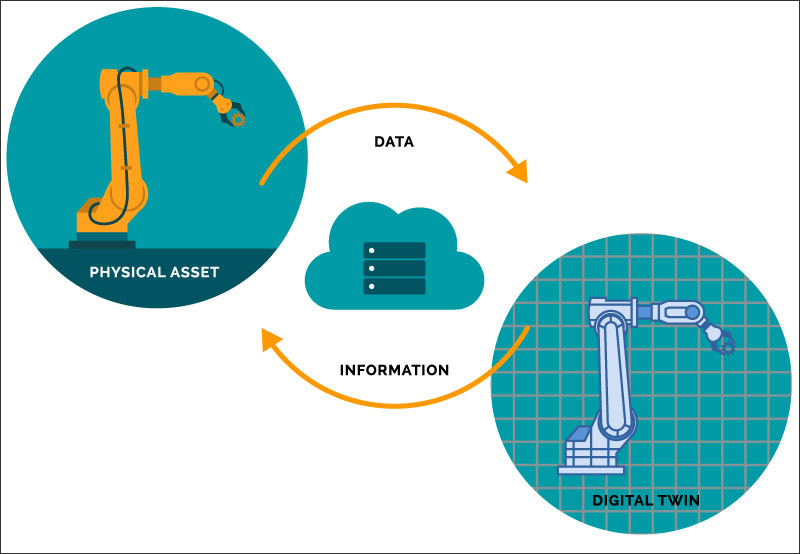
A Digital Twin is a living, continuously updated virtual replica of a physical asset—a bridge, power grid, water treatment facility, or offshore wind farm. Unlike static 3D CAD models, digital twins maintain a continuous, two-way data feedback loop with their real-world counterparts via Internet of Things (IoT) sensors, LiDAR scanning, and automated drone inspections.
Physical Asset (Bridge/Grid) ──[ IoT Sensors / Drone Scans ]──> Digital Twin (Cloud Model)
▲ │
└─────────────────[ Predictive Action / AI Rules ]────────────┘
1. Structural Health Monitoring (SHM)
Instead of relying strictly on periodic visual inspections, civil engineers embed fiber-optic strain gauges, accelerometers, and tilt sensors directly into infrastructure.
-
Real-Time Stress Mapping: When heavy load traffic or seismic activity occurs, the digital twin updates immediately to show internal stress concentrations.
-
Micro-Fissure Detection: AI models running on top of the twin analyze minute vibration changes to flag internal concrete micro-fractures before they become visible cracks on the surface.
2. Predictive Maintenance Over Reactive Repair
In traditional operations, components are either replaced on a fixed schedule (calendar-based) or after they break (reactive). Digital twins enable condition-based predictive maintenance:
-
Fatigue Life Estimation: By running continuous finite element simulations fed by actual thermal cycles and load history, engineers accurately project the remaining useful life (RUL) of individual components.
-
Targeted Work Orders: Maintenance crews receive precise, georeferenced coordinates showing which specific bolt, pipe section, or bearing requires service, minimizing downtime and field exposure.
3. “What-If” Operational Simulations
Digital twins allow systems engineers to stress-test complex assets under extreme hypothetical scenarios without risking real-world failure:
-
Extreme Weather Impact: Simulating a Category 4 hurricane or 100-year flood event on a municipal water grid to observe pressure drops, pipe burst risks, or electrical backfeeds.
-
Traffic Rerouting: Testing the structural impact of diverting heavy freight traffic onto secondary bridges prior to initiating roadworks.
The ROI Factor: Recent sector data indicates that deploying digital twins in large-scale infrastructure yields up to a 15–20% reduction in lifetime operational expenses (OpEx) and extends overall asset lifespan by years by avoiding catastrophic structural failures.