
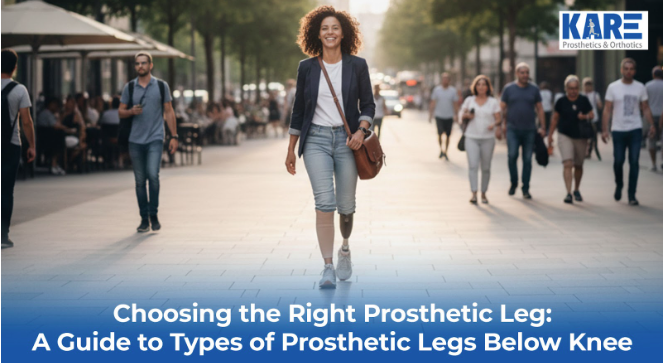

This guide applies to you if you are looking into prosthetic legs or know someone who is, and you are considering below-knee prosthetics. We also explain why Kare Prosthetics and Orthotics in Chennai may be a good option when you need custom, well-fitting products in India.
Why Choosing the Right Below-Knee Prosthesis Matters
A transtibial prosthesis (also referred to as a below-knee prosthetic leg) is a prosthetic leg that simply replaces the portion of the leg below the knee and retains your natural knee joint. This will assist you with walking and help you move more easily.
However, not every below-knee prosthesis is similar. The kind of lifestyle you have, the level of activity (walking, running, daily chores, sports), and the shape/condition of the residual limb all make a difference in the type that suits you best. There are several types of prosthetic legs below the knee, and their use can help you make the best decisions about your lifestyle. Since we are a reliable provider, the staff at Kare Prosthetics and Orthotics in Chennai considers these factors, and you will find a prosthetic leg that suits your body and life and offers you comfort, movement, and confidence.
What Makes Up a Prosthetic Leg?
It is always good to know the simple parts that make up the majority of prosthetic legs before venturing into the types. According to sources like Ossur and Ottobock, a below-knee prosthetic leg typically comprises:
Socket
The tailor-made “cup” or housing that your residual limb is inserted into. This has to be designed to perfection to eliminate stressors and pain.
Liner & Suspension
Your limb skin is covered with a soft liner to prevent direct contact with the socket and ensure a good fit. The prosthesis is firmly held together by suspension systems (locking pin, suction/vacuum, seal-in liner, etc.).
Pylon
The structural “leg” component between the socket and the foot, which may be composed of light and strong materials such as carbon fibre, titanium or aluminium.
Prosthetic Foot & Ankle (for below-knee)
This is similar to what the natural foot does: it absorbs shock, adapts to terrain, and permits walking or other activities. Various types of feet are best utilised in different activities and terrains.
Cosmetic Cover
A realistic outer skin (e.g. silicone or PVC) which provides the prosthesis with a more realistic appearance. It is a matter of taste: some people prefer a natural look, while others prefer functionality.
The residual limb and lifestyle of each individual are unique; hence, a good prosthetist will design these parts to fit you perfectly. The customisation of the fitting and component selection in Kare Orthotics is based on the needs, activities, and condition of each individual’s limbs.

Main Types of Below-Knee Prosthetic Legs
Here is an explanation of common types of prosthetic legs below the knee based on global prosthetic standards from Physio-Pedia, Össur, Ottobock, and Orthomerica.
1. Basic (Conventional) Prosthetic Legs
Endoskeletal Prosthesis
- Lightweight and easier to adjust over time
- Looks more natural because of the cosmetic cover
- Suitable for daily walking
Exoskeletal Prosthesis
- Has a hard outer shell
- Very strong and durable
- Good for heavy-duty use
These basic models are ideal if you have a low to moderate activity level. Kare Prosthetics and Orthotics in Chennai provides both types depending on your needs.
2. Energy-Storing or Dynamic Response Prosthetic Legs
These prosthetic legs have carbon-fibre feet that store energy when you step and return it when you walk forward, giving a smoother, more natural walk.
Perfect for:
- Daily walkers
- Office workers
- Active home users
- People who want less fatigue
These dynamic models are one of the most preferred types of prosthetic legs below the knee today, especially among users guided by Kare Orthotics for comfort and performance.
3. Microprocessor-Controlled (Smart) Prosthetics
If you enjoy jogging, hiking, or participating in sports, this type is ideal.
They include:
- Running blade-style feet
- High-energy carbon systems
- Multi-directional flexibility
These legs offer maximum bounce, energy, and freedom of movement. Many global brands design them for athletes and active users.
4. Temporary or Preparatory Prostheses
Used right after surgery and during the healing process. They help your limb adjust and reduce swelling.
Benefits include:
- Easier adjustments
- Helps shape the residual limb
- Prepares you for a final prosthesis
KARE Prosthetics and Orthotics in Chennai often recommends this first step for new amputees to ensure long-lasting comfort later.
How to Choose the Right Prosthetic Leg
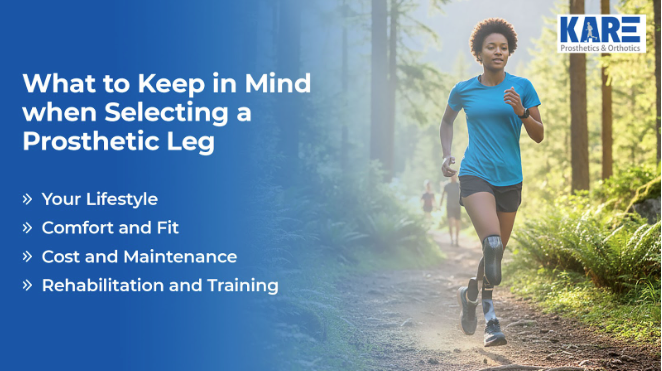
Choosing among the many types of prosthetic legs below knee depends on:
1. Your Activity Level
- Low: Basic prosthesis
- Medium: Dynamic foot
- High: Sports prosthesis
2. Shape of the Residual Limb
An appropriately fitting socket will not cause pain or skin problems.
This is why many individuals prefer getting fitted at Kare Prosthetics and Orthotics in Chennai for accurate customisation.
3. Weight, Build Height and Strength
Prosthetic feet are of different sizes and strengths.
Kare Orthotics ensures the foot chosen suits your body weight, walking pattern, and daily needs.
4. Future Adjustments and Maintenance
Other prostheses require higher tuning than others.
It is significant to select a prosthetist who encourages follow-ups.
Why Choose Kare Prosthetics and Orthotics in Chennai?
Here’s why users trust Kare prosthetics and orthotics in Chennai when selecting among the many types of prosthetic legs below the knee:
1. Customised Fittings
They take measurements to ensure they are comfortable, stable, and aligned.
2. Availability of International Brands of Prosthetic
You receive alternatives of international standards, from simple to sophisticated.
3. Personalised Guidance
They evaluate your activity, lifestyle, ambitions, and comfort needs, then recommend the appropriate type.
4. Knowing Indian Terrain and Climate
In India, walking surfaces vary, and weather conditions also influence the materials, which Kare professionals keep in mind when selecting parts.
With this expertise, Kare Orthotics helps you walk confidently and comfortably at every stage of your prosthetic journey.
Quick Comparison: Which Below-Knee Prosthesis Suits You?
| Your Requirement | Best Type of Prosthetic Leg |
| Healing phase | Temporary / Preparatory |
| Home use & low movement | Basic / Endoskeletal |
| Daily walking & office routine | Dynamic / Energy-Storing |
| Active lifestyle | Dynamic or Sports |
| Running / Sports | High-Performance Carbon Prosthesis |
Conclusion
Understanding the types of prosthetic legs below the knee helps you choose what truly fits your lifestyle and comfort. Whether you want a simple model for your day-to-day chores or a high-tech, energy-storing foot for an active schedule, the right guidance will make the process easier.
With expert support, custom fittings, and detailed evaluation, Kare Prosthetics and Orthotics in Chennai and Kare Orthotics ensure that your prosthetic leg becomes a natural, confident part of your everyday life.